


By political scientist Volodymyr Fesenko
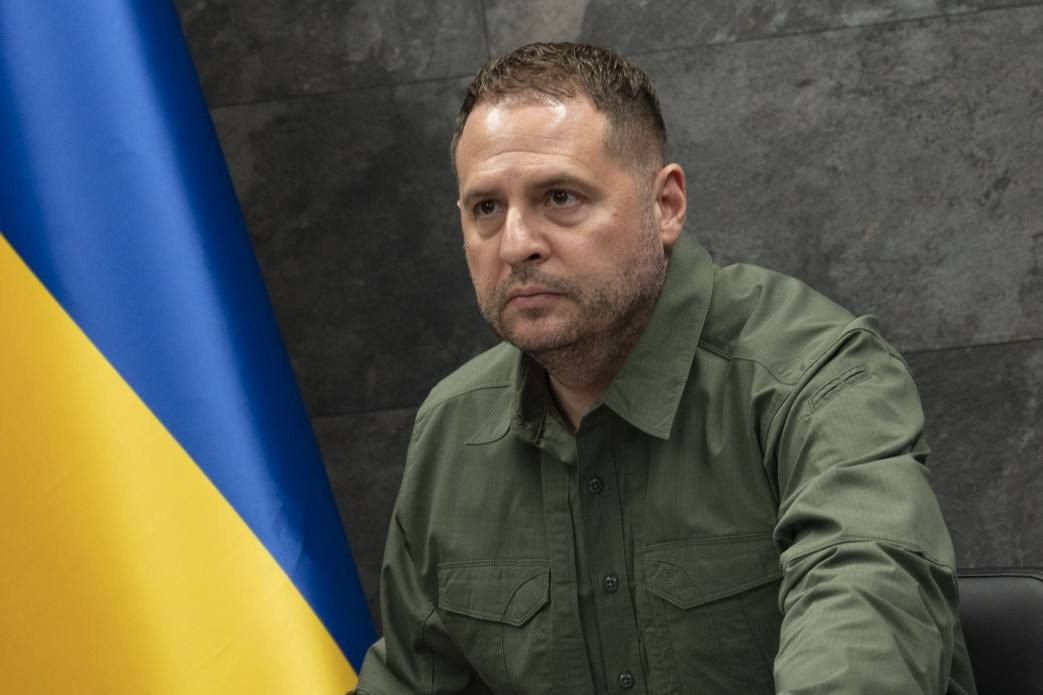
The resignation of Andriy Yermak from the position of Head of the Office of the President of Ukraine, which took place on 28 November, was not just a major political earthquake. In essence, it represents a kind of mini-revolution for both the system of state governance established during Volodymyr Zelensky’s presidency and for political processes in Ukraine.
But what specific political consequences might arise from Yermak’s resignation as Head of the President’s Office?
Yermak’s resignation will very likely reduce (at least partially) the personal influence of the Head of the President’s Office on the country’s governance system. The fact is that Yermak often used mechanisms of hands-on management personally tied to him. To a large extent, it was a personalized administrative system. Moreover, he had very close, trusting relations with President Zelensky. Whoever becomes the new Head of the President’s Office will not have such personal ties with Zelensky and will not be able to use the same methods of influence as Yermak. Consequently, the personal influence of the new head on the state administration system will be noticeably smaller than Yermak’s.
However, President Zelensky’s influence over the government, security agencies, and local state administrations will largely remain. It will be more complicated regarding influence over the Verkhovna Rada, where the one-party parliamentary majority represented by the presidential party may cease to exist. Nevertheless, crisis processes within the president’s parliamentary faction began earlier, and Yermak’s resignation will only intensify and accelerate them. Significant changes may also occur in the information environment. This concerns the future of the national telemarathon and, especially, the network of Telegram channels associated with Yermak.
Yermak’s resignation will have a paradoxical effect. It will weaken the hands-on administrative system built by Yermak within the President’s Office. At the same time, it may relatively stabilize the political situation in the country, as it will relieve excessive political tension associated with widespread negative attitudes toward Yermak among many Ukrainian politicians and a significant portion of civil society.
Regarding relations with European and American partners, Yermak’s resignation is likely to have a positive impact. Europeans have long requested President Zelensky to dismiss Yermak. The corruption scandal only strengthened these demands. The Americans (under both Biden and Trump) also did not particularly favor Yermak, including as a negotiator. According to various sources, the Americans reportedly did not like his level of English, his inflexibility, his monopolized influence on Zelensky, and the restriction of access to the President by the Head of his Office. However, it should be noted that the Americans had no political objections to Yermak, including regarding his negotiation stance. They simply did not approve of his style and peculiarities of political behavior.
Therefore, Yermak’s resignation will not harm relations with international partners; if anything, it will strengthen them. It is not Yermak’s resignation but the large-scale corruption scandal in Ukraine that weakens President Zelensky’s international position.
Yermak’s resignation will not weaken Ukraine’s negotiating position; it may even strengthen it. Many disliked Yermak’s excessive role in peace negotiations. However, Ukraine’s negotiating position was defined not by Yermak but by President Zelensky, and it was formed collectively, not individually. Ukraine has a strong and experienced negotiating delegation. The main negotiator with the Americans has already been appointed—Rustem Umerov, who also heads negotiations with Russia. He has the necessary high status (Secretary of the National Security and Defense Council), extensive experience in wartime peace negotiations, and strong connections in Turkey, the Middle East, and the U.S. A potential issue could be that Umerov is also a potential subject of an NABU investigation.
Unlike the negotiation process, Zelensky does not yet have a ready candidate to replace Yermak in the President’s Office. Various candidates are being discussed, but there is no clear favorite. Who will Zelensky choose?
Experienced government officials are most often mentioned. Many suggest that the President’s Office could be headed by Yulia Svyrydenko, who has previously worked in the President’s Office and is trusted by Zelensky. However, she is currently Prime Minister, and her resignation would trigger the resignation of the entire government. Appointing a new Prime Minister and government through parliament under current conditions would be much more difficult and could provoke a government crisis, which is highly undesirable during wartime. Another candidate mentioned is Denys Shmyhal, Minister of Defense and former Prime Minister. He is an experienced state manager, fully loyal to Zelensky, and a disciplined executor. However, this would create the need to find a replacement for the Defense Minister, who must also be approved by parliament. A similar situation applies to Mykhailo Fedorov, currently First Vice Prime Minister and head of the Ministry of Digital Transformation for six years.
Second, Zelensky could choose from Yermak’s deputies who have experience in the President’s Office and have the President’s trust.
Third, there could be an unconventional choice. Various sources suggest the new Head of the President’s Office could be a career military officer. In fact, this could be an optimal option during wartime, especially from an image perspective, as it would demonstrate focus on resisting the Russian invasion and ensuring the President’s functions as Commander-in-Chief.
In this context, Pavlo Palisa, Deputy Head of the President’s Office responsible for military policy, is often mentioned—a career military officer (colonel) with a good reputation in the armed forces and experience in negotiations with the U.S.
On Saturday, 29 November, the President held a series of meetings with senior officials—Head of Military Intelligence K. Budanov, D. Shmyhal, M. Fedorov, and P. Palisa. These meetings are perceived as interviews with potential candidates for Head of the President’s Office or other high-level state positions in the event of top-level personnel changes.
The choice of Yermak’s successor will not significantly affect the political situation in Ukraine. The political processes in Ukraine will be influenced more by Yermak’s resignation than by the identity of his successor. The new Head of the President’s Office should rather reassure society and demonstrate that this person will not be a “new Yermak”—that is, an all-powerful second leader of Ukraine.
In opposition circles, there are supporters of an almost conspiratorial theory that Yermak is resigning only formally but will remain behind the scenes, continuing to run the President’s Office unofficially. However, given Yermak’s irate comment to the New York Post about his resignation, and reports from some media about how he perceived his dismissal, this theory now seems unlikely.
Yermak may maintain good personal relations with Zelensky and even act as his unofficial advisor, possibly secretly. But if his potential influence on the President’s decisions becomes known, it will provoke criticism and accusations against Zelensky.
Andriy Yermak’s political influence was based exclusively on his position as Head of the President’s Office and his close, trusting relationship with Zelensky. He had no other tools of political influence.
Yermak could partially retain influence if his protégé were appointed as the new head. However, this scenario seems unlikely. If something like this occurs and Yermak runs the Office behind his protégé’s back, it would quickly become known and provoke a major scandal, accusations against Zelensky, and a new conflict.
Considering that Yermak has now lost his decisive position and likely regular contact with Zelensky, and will be under NABU’s anti-corruption investigation, his political influence is likely to be minimal (and only if he occasionally communicates with Zelensky or maintains contacts with influential people in power).
In any case, Ukraine is entering a political life without Yermak. What this will look like, we will see in the near future.