

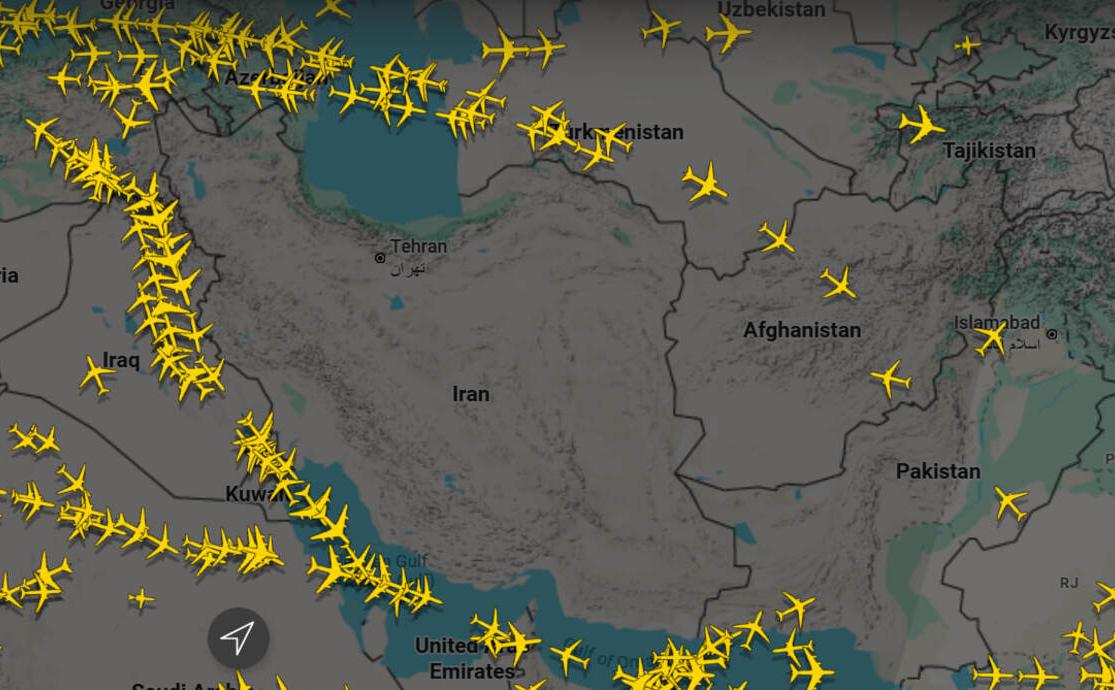

Taking into account all the ongoing preparations, the likelihood of a U.S. strike on Iran keeps growing, but we should wait for it to actually happen.
The required force package depends on the set of targets chosen: internal security forces, missile and other military facilities, nuclear sites, or the political leadership. For some target sets, the forces and assets the United States already has in the theater would be sufficient; for others, a buildup would be needed. At this point, strikes against internal security forces appear the most likely; beyond that, everything depends on Trump’s intentions.
Without external intervention, the Iranian authorities will suppress the protests, regardless of the amount of bloodshed. At the same time, even a U.S. strike would not necessarily mean the fall of the regime, although it would to some extent shift the balance of power and give protesters hope. On a practical level, this would allow Trump to “back up his words,” after which he could either declare this another victory regardless of the real situation, or continue and expand the strikes. Which option he will choose is something he may not have decided yet himself.
Iran has promised to respond to a U.S. strike with attacks on U.S. bases and on Israel, and Israel is preparing to repel such a response. In the previous round in June, an important factor—alongside air and missile defense—was Israel’s strikes on Iran’s missile capabilities, which had a significant effect at the time. However, while air defense can be activated automatically, Israeli strikes would require Trump’s consent. So it remains to be seen how coordination on this issue will work and what decisions will be made. We were preparing the next round in Iran even before the current unrest began there, but the green light is needed from Trump. And if Iran were to limit itself to targeting only U.S. bases, we would continue preparations for now.
Iran has managed to rebuild its missile arsenal—perhaps not yet back to the roughly 3,000 missiles it had in June, but it has increased it nonetheless. Both then and now, the number of launchers has been harder to assess. In any case, preparations at both times were for salvos of up to 200 missiles, while the 500-missile salvos promised by Iran are considered less likely. Last time, they were unable to deliver even 200 due to our strikes and soon shifted to smaller, scattered launches instead of concentrated salvos.
If Israel responds to Iran’s response, there are scenarios in which this could slide into a war of attrition and a prolonged exchange of strikes. In that case, the question will be whether Trump again seeks to quickly wind things down by pressuring Israel not to continue.
A preemptive Iranian strike before a U.S. one is considered less likely, as that would require the Iranian authorities to decide to anger Trump even more than they already have.
In short, for now everything points toward a U.S. strike, unless Trump suddenly decides to back out. And since psychologists generally recommend cleaning as one way to calm the nerves, you could tidy up the bomb shelters—two birds with one stone.
After such a buildup, it becomes increasingly difficult for Trump not to strike Iran — “otherwise the good guys simply won’t respect me.” Backing out is possible, but hard. The scale of the strike, however, is a different matter. A limited strike is вполне possible: several dozen or a couple of hundred Tomahawks against Basij facilities and other repressive organs. After that, the Iranian authorities would finish crushing the protests and declare that the intrigues of provocateurs and terrorists have failed, while Trump, for his part, would declare victory and say that blood is no longer being shed in the streets of Iranian cities.
Toppling the Iranian regime, however, would require far more extensive and sustained strikes, plus enhanced support for the protesters with weapons, organization, communications, logistics, and political backing. Above all, it would require a decision by Trump to actually pursue regime change and do everything necessary to achieve it. The distance from “launching a strike on Iran” to “changing the regime in Iran” is enormous.
Iran’s response will also depend on the scale of the U.S. strike. The smaller the American strike, the greater the chances that Iran’s response will resemble its June strike on the U.S. base in Qatar, and the greater the chances that Tehran may decide not to drag Israel into this and instead limit itself to U.S. bases, in order to avoid unnecessary consequences at this stage. Of course, there is no reason to relax: the option of striking Israel remains on the table, and this threat has been voiced repeatedly. But Iran’s decision will depend on U.S. actions.
If the scale of the strike is larger, or if Iran takes a principled stand and strikes Israel regardless, and the campaign then expands either by Trump’s decision or through a tit-for-tat escalation, then the deck will be reshuffled — and we’ll talk again.