

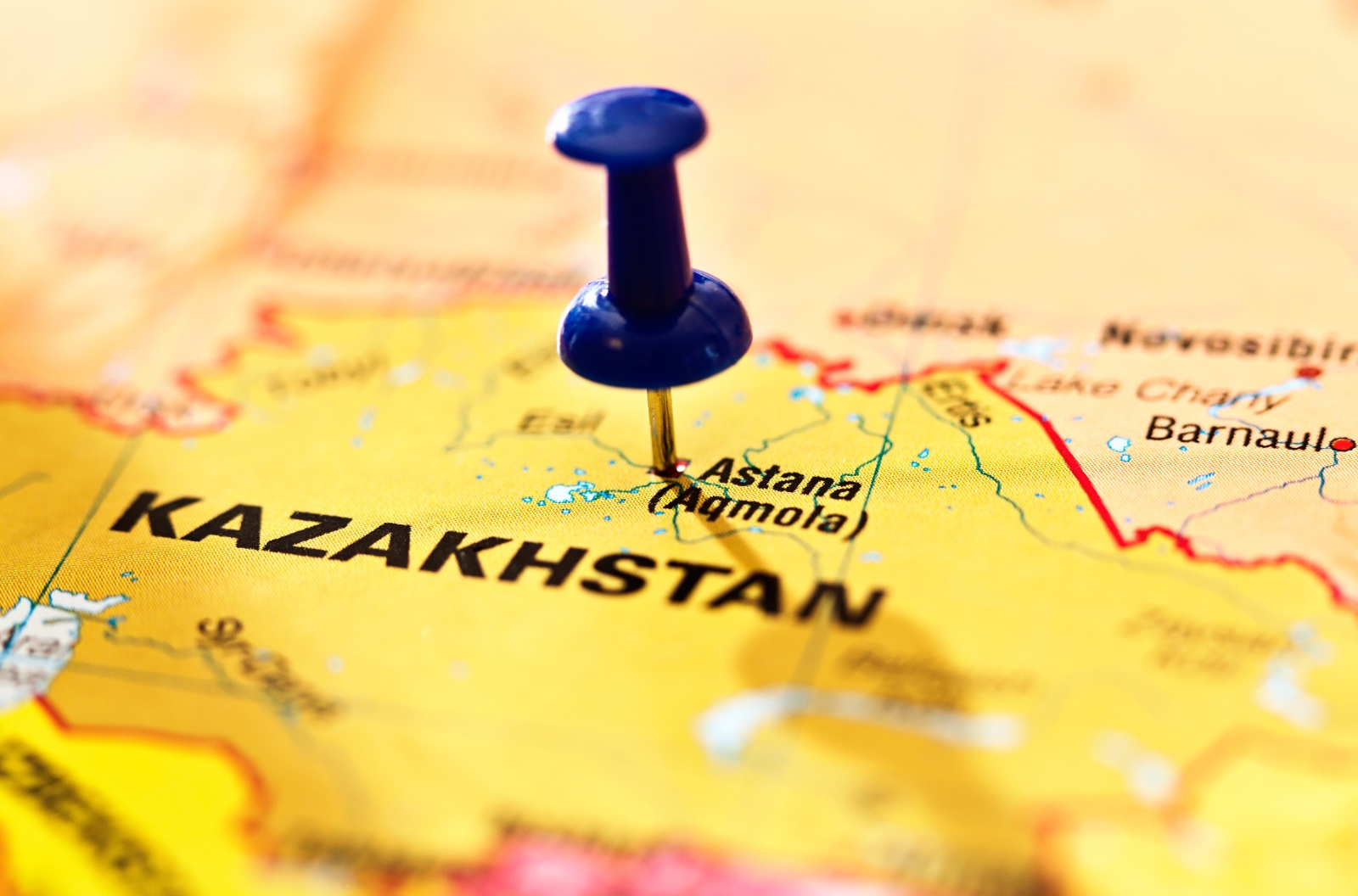

Since the start of Russia’s full-scale war against Ukraine, Kazakhstan has become one of the key channels supplying the Russian defense-industrial complex with sanctioned goods, the Robert Lansing Institute stated.
Amid Western restrictions, trade flows between Astana and Moscow have surged, particularly in microelectronics, drones, and dual-use components needed for the production of Russian missiles, drones, and other military equipment.
Since 2022, deliveries of high-tech products to Russia have multiplied. Exports of microchips from Kazakhstan jumped from $245,000 in 2021 to $18 million in 2022. Electronics and mobile phone shipments from January to October 2022 reached over $575 million, compared to $30–35 million the previous year. Computer exports rose to $296 million, whereas in 2021 they were almost nonexistent at $127,000.
This trend is explained by parallel import schemes: high-tech goods are purchased in the EU, the US, or Asia, registered to Kazakh companies, and then re-exported to Russia as “Kazakh exports” under the EAEU duty-free regime.
A separate channel has been the re-export of drones and their components. In 2022, Kazakhstan imported drones worth around $5 million and sent $1.23 million worth of drones to Russia. These figures reflect only officially declared shipments, excluding components, microchips, and parts passing through intermediary companies. Investigations indicate that Russian beneficiaries set up shell companies in Kazakhstan to purchase electronics and drones in Europe, China, and the US and then send them directly to the Russian defense industry. Analysts estimate that microelectronics and components for missiles and drones worth billions of dollars have already been supplied to Russia via Central Asia, although the exact share of each country is difficult to determine.
Moscow’s support from Kazakhstan extends beyond electronics. In energy, Astana serves as a key transit hub. Russian gas transit through Kazakhstan to Uzbekistan is projected to reach 5.6 billion cubic meters in 2024, 7.3 billion in 2025, and up to 11 billion in 2026. These routes help Moscow redirect gas flows from Europe to Central Asia, partially mitigating the effects of sanctions. Around 80% of Kazakh oil is exported via the Caspian Pipeline Consortium to a port near Novorossiysk—an infrastructure also used by Russia. While the EU allows imports of non-Russian oil transported through Russian pipelines, experts note that this system creates risks of obscuring the origin of the raw materials.
In 2025, Kazakhstan remains a key strategic buffer, enabling Russia to circumvent Western restrictions. Unlike Kyrgyzstan or Armenia, Kazakhstan has developed transport infrastructure, a large economy, and the ability to disguise Russian shell companies as local businesses. Astana’s policy remains dual: publicly supporting Ukraine’s territorial integrity while continuing to turn a blind eye to re-exports that effectively strengthen the Russian defense industry. Factors include fear of Russian hybrid operations, dependence on Russian logistics routes, and pressure from local businesses profiting from trade with Moscow.
Western pressure on Kazakhstan remains limited, and trade between Russia and Kazakhstan is expected to grow in 2025–2026. Central Asian countries remain crucial channels for delivering microelectronics, optics, drone components, CNC machines, communications equipment, and other technologies critical for Russian strike systems—from Lancets and Orlans to Kalibr and Iskander missiles.