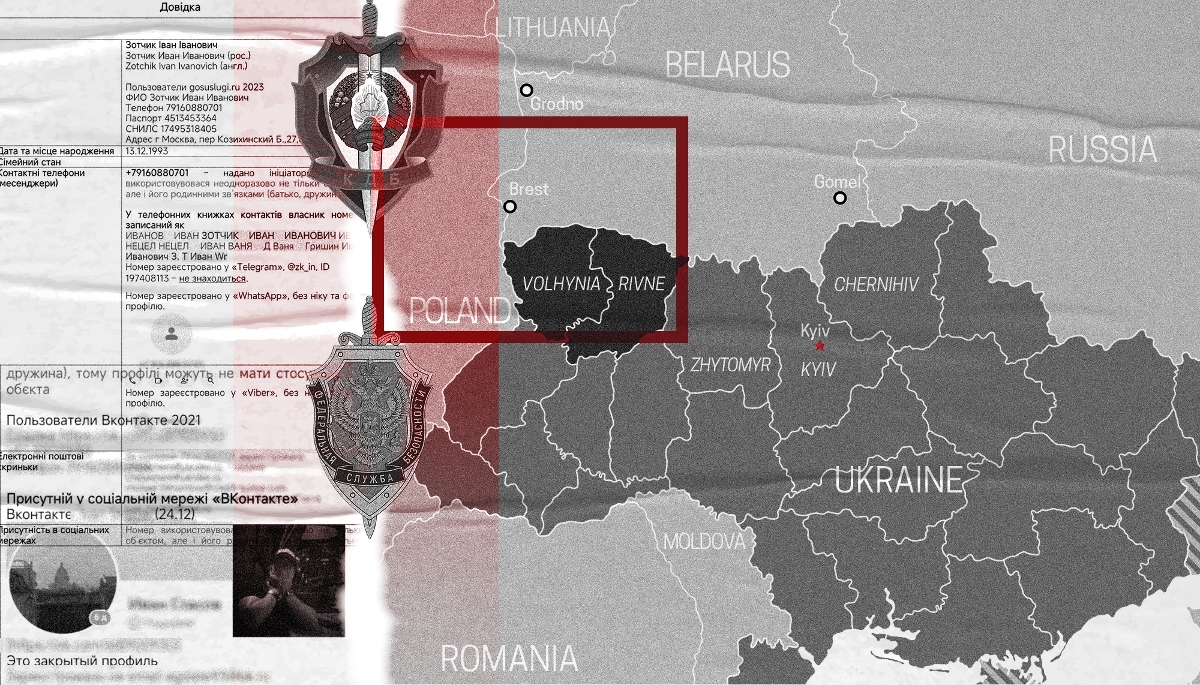




Russian intelligence services have shifted to a tactic of using “disposable” agents, recruiting random individuals through social media to carry out sabotage and disinformation attacks in Poland and other European countries, as reported by Polskieradio.
Lieutenant Colonel Maciej Moritz, an expert at the National Defence Foundation and former officer of the Polish military intelligence, notes that a key advantage of Russian intelligence lies in its deep institutional memory and the continuity of traditions dating back to the Tsarist Okhrana and Soviet KGB. Unlike Western agencies, they have never undergone systemic resets, which allows them to maintain continuity in their methods and agent networks. With Vladimir Putin’s rise to power, there was a fundamental shift: whereas previously the intelligence services merely served the country’s leadership, they have now become the power themselves, shaping key political trends and forming the backbone of state governance.
The modern GRU has made counterintelligence work significantly harder for the West by beginning to recruit individuals without military backgrounds, who cannot be traced through academy alumni databases. Since the start of the full-scale war in 2022, Russian intelligence methods have changed. One major trend is recruiting operatives via social media at a low, tactical level. These individuals are hired for one-time operations, after which the intelligence services effectively “sacrifice” them, paying no attention to those who fall into the hands of justice. At the same time, Russia invests enormous resources in disinformation campaigns aimed at polarizing Western societies and weakening support for Ukraine.
In Poland, there has recently been a sharp increase in the activity of the military component of Russian intelligence, focusing on sabotage and infrastructure attacks. Moritz emphasizes that the absence of democratic oversight allows the FSB and GRU to adapt instantly to situations and take extreme measures, including physically eliminating opponents worldwide without fear of criminal prosecution within Russia. Reflecting on the miscalculations at the start of the war in Ukraine, Moritz notes that Moscow had high-quality intelligence, but it was misinterpreted. The Russian leadership mistakenly believed that the Ukrainian state would collapse under the initial strikes, leading to the failure of the tank column offensives.
Combating disinformation poses a particular challenge for the legal system. As a lawyer, Moritz explains that the line between intentional harmful influence and freedom of speech is extremely thin. Legal practice still lacks a clear definition of disinformation that would allow authorities to effectively punish criminals without putting ordinary people—who may spread false content unknowingly or simply express personal beliefs—at risk.