

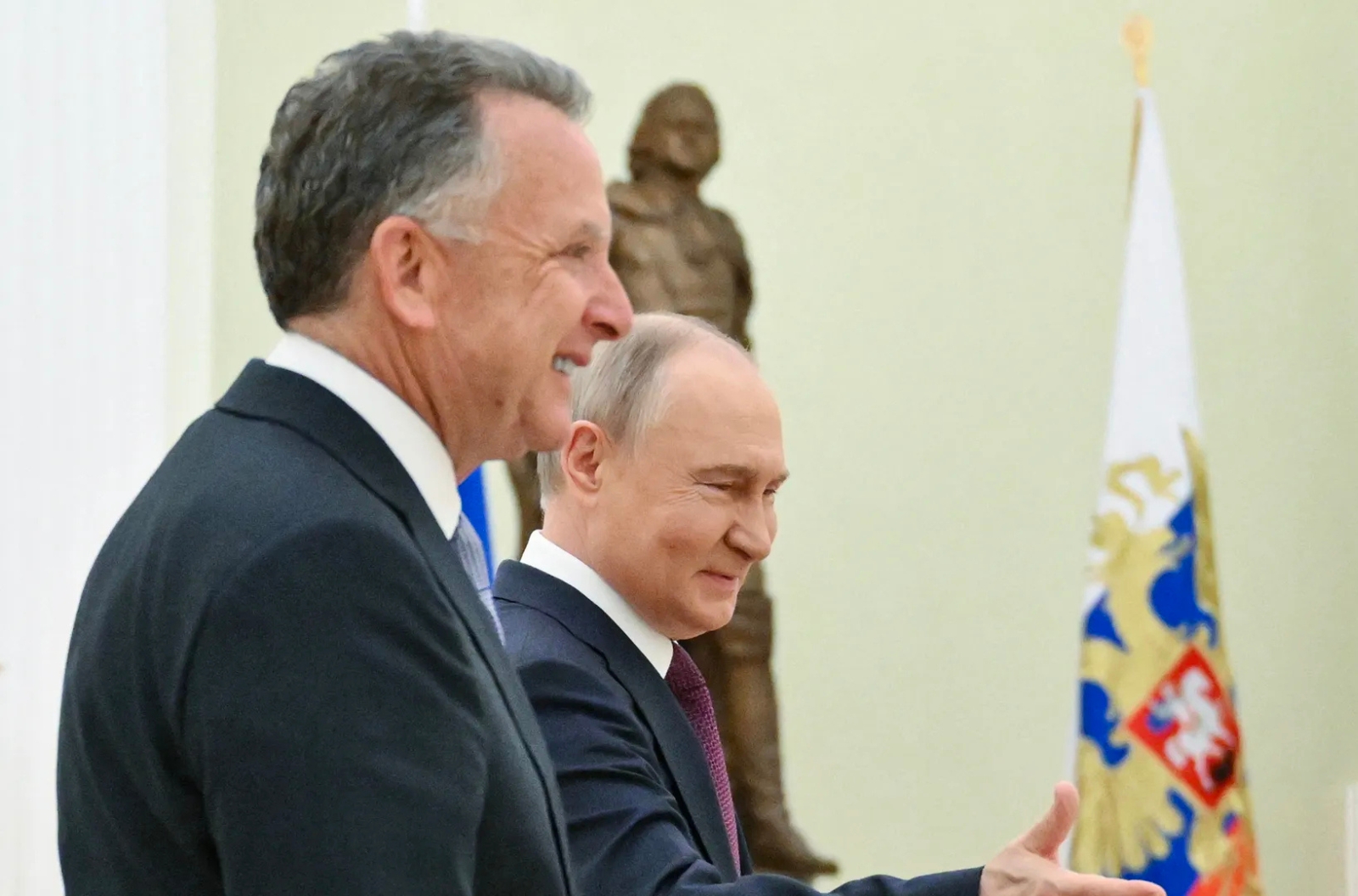

On Tuesday, Witkoff will be in Moscow to speak with Putin. There will be another round of verbal escalation both before and after the meeting. On December 4, Putin departs for a visit to India, from where he will also signal something. In other words, all week we will be riding the informational rollercoaster. And on top of that, Trump might start squaring off with Epstein in Venezuela…
So, let’s fix the baseline situation.
All our problems are known and have been discussed many times. There are plenty of people online who monetize savoring them. There is absolutely no reason for euphoria. Nevertheless, there is also no reason to faint at Russian psychological attacks.
-
Despite the serial lies of Putin and his generals, neither Pokrovsk nor, even more so, Kupiansk are under Russian control.
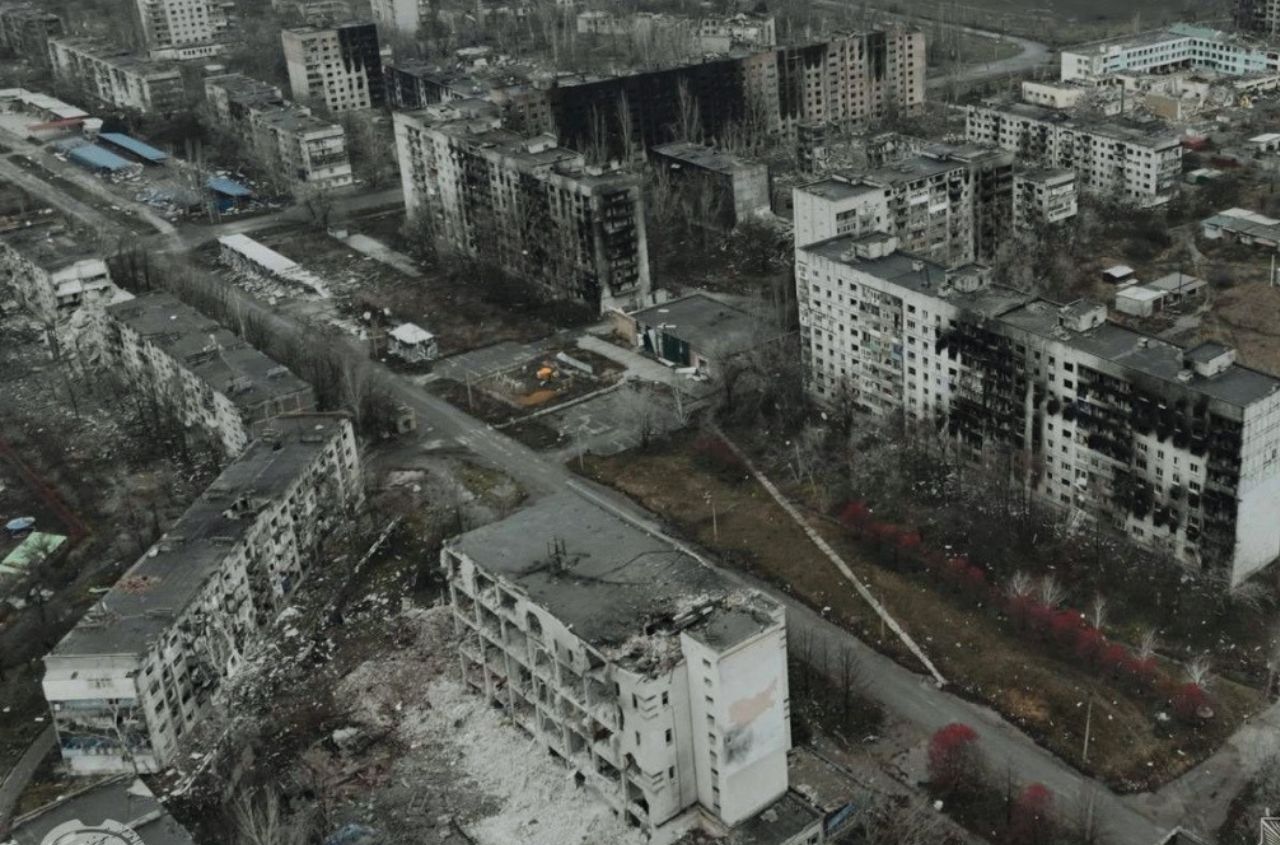
In Bishkek, Putin misspoke, calling Konstantinovka “Komsomolsk.” But the essence hasn’t changed — the Russians do not control Konstantinovka even remotely, although they are systematically destroying the city.
By winter, the Russians advanced on several fronts, yet they haven’t even achieved the results that Gerasimov reported on August 30 (!). Watch his video and compare. The gap is not only with the plans — it’s a three-month gap with the already announced “achievements.”
As a result, the Russian forcesf are behaving more brutally than usual. They target kindergartens and residential high-rises, execute prisoners, hunt civilians with drones as they try to escape front-line areas. They make life unbearable in Kherson, Chernihiv, and Sumy regions, attempt to create a humanitarian catastrophe in Kharkiv, and terrorize Odessa…
The Russians compensate for their military impotence with war crimes.
-
In the fall, Ukraine increased strikes on Russian military and critical infrastructure targets. Several precedents have been set both in terms of range and nature of attacks.
Ukrainian drone and missile strikes are carried out on a continental scale, without exaggeration — from Ust-Luga and Primorsk to Dagestan and Orsk.
The Ukrainian Defense Forces conduct complex air strikes, which the Russian air defense/missile defense system cannot handle, even in strategically important areas such as the port of Novorossiysk.
Middle-strike operations are now reaching full design capacity.
The approach to critical infrastructure in temporarily Russian-occupied territories has changed. The Russian army will no longer be able to parasitize it, which will affect electronic warfare, air defense, and other high-tech components of the Russian forces.
The number and tactics of Ukrainian interceptor drones are rapidly increasing. Without them, the effectiveness of Russian attacks would be dramatic.
Naval drones penetrated the port of Tuapse (Defence Intelligence) and attacked Russian tankers in the Black Sea (SSU).
Ground drones are being integrated into routine operations as well as conducting unique missions, such as evacuating the wounded.
This does not eliminate (and in some cases does not offset) existing problems, but it shows that the war is definitely not a one-sided beating that must lead to unconditional surrender.
The front provides no grounds for demanding capitulation. A heavy and unfair “compromise” can only be imposed either due to the situation in the rear (as of December 1 — no grounds exist) or due to adjustments in the position of external partners (we’ll see)…
-
Much will depend on the outcomes of the cognitive war, that is, the impact on the ability to process information and make decisions. Therefore, it is necessary to “keep a cool head.”
We are already seeing how global media are fully becoming instruments of combat in the cognitive sphere.
The resilience of key sectors (economy, energy, and finance) depends on the position of Western partners, whom Russia, on one hand, tries to intimidate, and on the other, attempts to sow doubt about Ukraine’s prospects, painting a picture of hopelessness.
The Kremlin’s practical objectives are to disrupt aid and block the tightening of sanctions. Putin demonstrates his intention to continue fighting at least until the end of winter, counting on a cascade collapse of the Ukrainian state.
Russia’s tactic is to provoke a chain reaction.
The most advantageous scenario for Russia is when Ukraine no longer serves as an unquestioned recipient of aid. Then partners would automatically stop, creating a crisis in the rear and at the front. That is why Moscow has sharply intensified rhetoric on “legitimacy” and the need to negotiate without Ukraine’s input. They are thus pushing the topic of elections.
We already see that a number of potential electoral leaders have begun issuing extensive publications. The flip side of this process will be the classic “self-targeting of administrative resources,” especially after the dismissal of the head of the Office of the President.
This will occur in the Verkhovna Rada, Cabinet, at the regional level, as well as in security structures and the military. To create conditions for this, the Kremlin may ease pressure for a while (during the Christmas–New Year period), stimulate rat races, and then strike in a concentrated way.
-
In this section, one can list various signs of deepening economic and social problems in Russia. There are plenty, and they became much more visible in the fall. They are in the focus of many analysts.
The fact is that Russia will continue maneuvering for several more months, without reducing pressure, even amid worsening conditions.
However, in the short term, it is extremely uninterested in cascading failures (which new sanctions or strict enforcement of existing ones could provoke). And it is unclear how Russia would react to a large-scale blackout. Much could also go wrong on their side.
From a strategic perspective, the Kremlin cannot ignore that the longer the military adventure against Ukraine drags on, the faster the chances of restoring pre-war positions will shrink, even in the case of an epic “victory” and territorial consolidation.
The energy market has already been reshaped. Technological lag has gone into overdrive. Influence through arms supplies is shrinking. In the Baltics, the Caucasus, and Central Asia, positions are chronically weakening. Armenia no longer attends the CSTO, and Moldova is expelling spies from “Rossotrudnichestvo.” Putin needs to find other moves…
Therefore:
One must, of course, hope for a quick peace. I’ve been hoping for it for almost four years already.
However, it is important to focus on the day-to-day and prepare to endure reliably until spring.
This very readiness can unexpectedly bring the sought-after peace closer. And, of course, supporting the army as much as possible remains a given.