


Main image credit: Belga News Agency
The Belgian State Security Service has named the Russian Federation the main national security threat, according to the Brussels Times.
The 2025 report from the State Security Service (VSSE) presents a complex picture of challenges, with Russian influence, espionage, and interference in democratic processes occupying a central place.
Justice Minister Annelies Verlinden, commenting on the document, emphasized that in a rapidly changing geopolitical environment, the country must rely on forward-looking intelligence capable of countering external pressure.
Alongside Russia, the report pays significant attention to China and organized crime, which undermine the foundations of state stability.
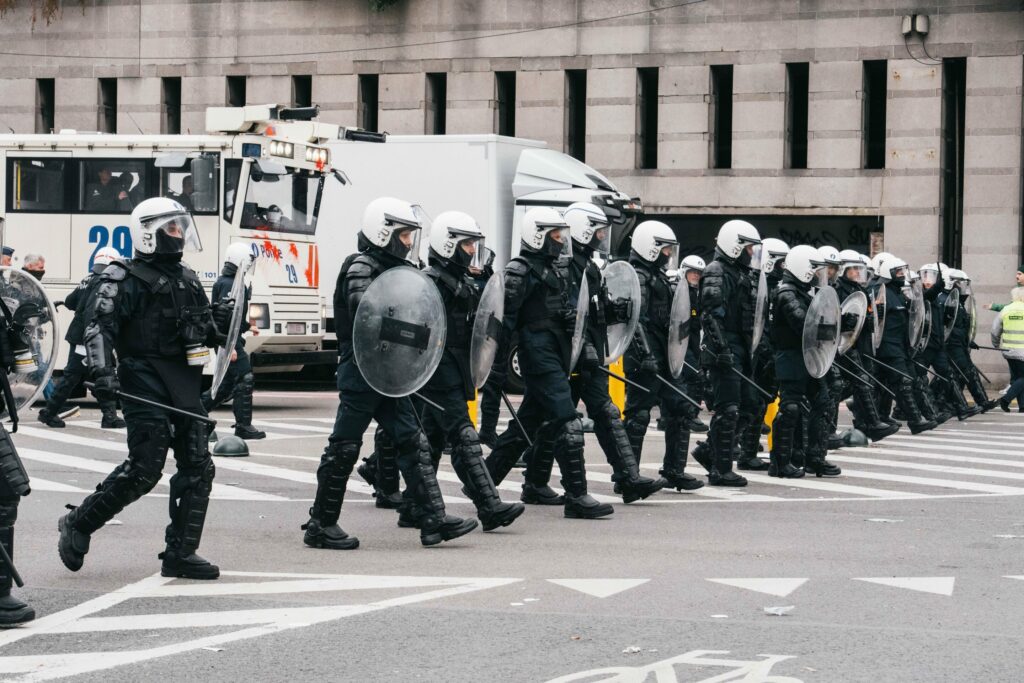
In addition to external threats, Belgium has seen a rise in “accelerationism”—a nihilistic form of extremism within far-right circles that combines racism, Satanism, and antisemitism. Intelligence identified around ten criminals linked to this movement, though experts warn that the true scale of the phenomenon may be much larger. Left-wing extremist groups also manifested in 2025 through vandalism and clashes with police during anti-fascist demonstrations. Despite the growing violent potential in these circles, the likelihood of a full-scale terrorist attack in the short term is considered low.
Radical Islamism remains the primary terrorist threat to Belgium. About 80 percent of the work of joint intelligence centers last year was directly related to ISIS and al-Qaeda activity. Of particular concern is that minors and youth radicalized through online propaganda were involved in one-third of planned attacks. This indicates that existing deradicalization programs are not reaching the intended audience. In December 2025, ISIS openly called for attacks in Belgium, confirming that the country remains a priority target for terrorists.
Security services are also closely monitoring the situation in northeastern Syria, where jihadists connected to Belgium could have escaped from prisons due to the collapse of Kurdish forces. Regarding the Middle East, the influence of Hamas and Hezbollah on Belgian territory is assessed as minimal. As part of the Trump peace plan, Hamas committed to laying down arms and is focused on survival in Gaza, while Hezbollah’s activity in Belgium is limited to propaganda and occasional fundraising. At the same time, the Muslim Brotherhood continues attempts to influence state policy, which, according to VSSE, creates long-term risks of segregation and polarization within Belgian society.