


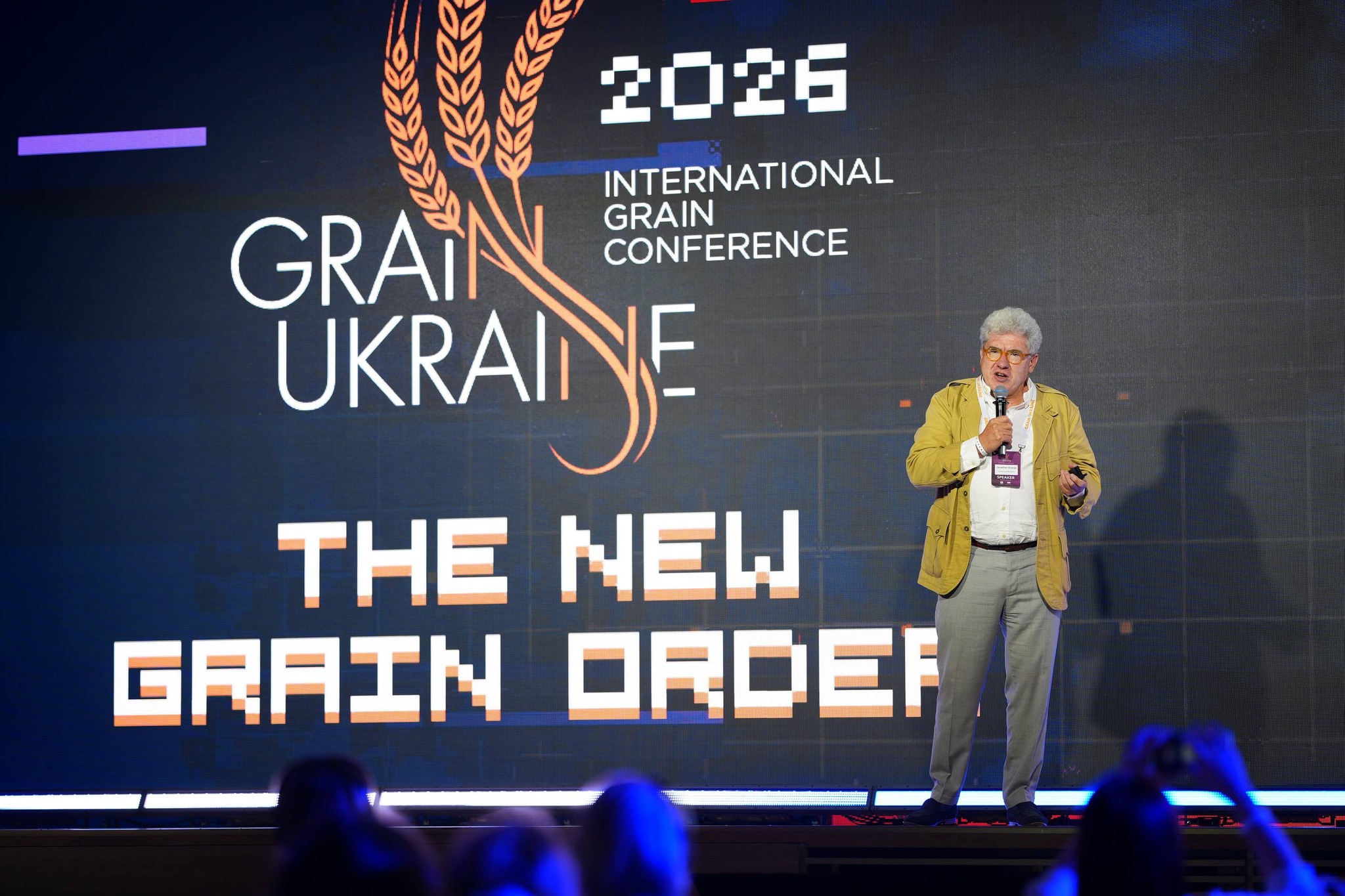
By Jonathan Grange at Grain Ukraine
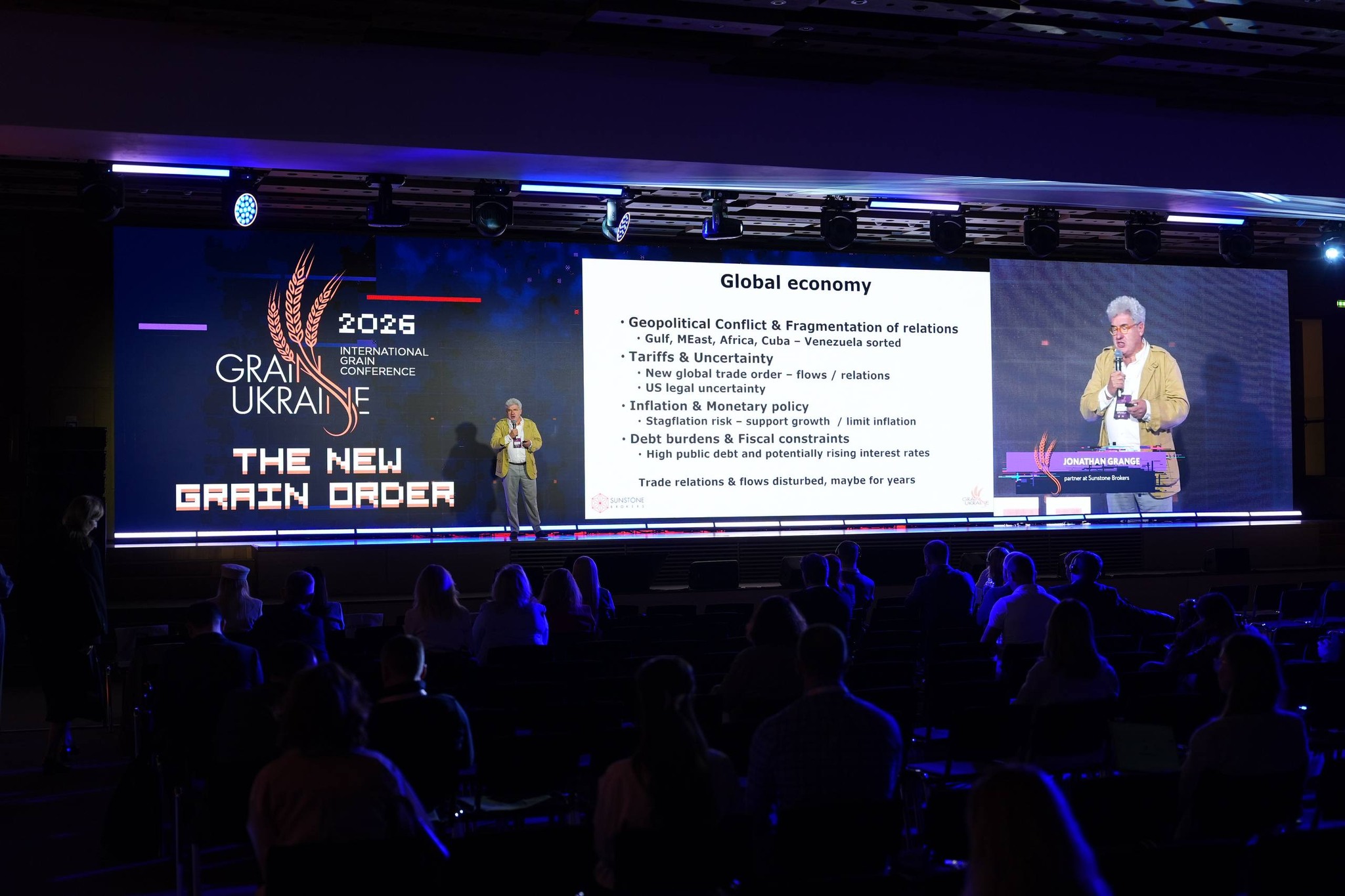
Agricultural companies will have to operate in conditions of significantly higher uncertainty than the world has seen in recent decades — Sunstone Brokers partner Jonathan Grange presented his outlook at Grain Ukraine in a speech titled “Macroeconomic factors affecting the global grain business in 2026.”
The familiar global order is rapidly changing. Geopolitical conflicts are spreading across virtually all regions of the world, international relations are becoming increasingly fragmented, and trade wars and tariff restrictions are making long-term planning more difficult for businesses.
Prices for grain, fertilizers, or energy resources can no longer be analyzed separately from geopolitics, climate, and technological competition. Markets will be influenced by conflicts in the Middle East, relations between the US and China, the development of biofuels, weather phenomena such as El Niño, water resource availability, and climate change.
One of the key risk factors is the intensification of rivalry between the United States and China. Today it is not only competition for economic leadership, but also for technology, military power, access to resources, and control over key production chains. Special attention is focused on Taiwan, where about 70% of the world’s semiconductors are produced. Any escalation in this region could have consequences far beyond the technology sector.
At the same time, both of the world’s largest economies face internal challenges. In China, consumption is slowing, a real estate market crisis is ongoing, and demographic problems are worsening. The United States is experiencing political polarization, growing distrust in government, and debates about the impact of artificial intelligence on the labor market.
Energy plays a particularly important role. Despite conflicts in the Middle East and risks to oil supply routes, markets are reacting more cautiously than analysts expected. At the same time, energy prices remain one of the key factors directly affecting agricultural production, logistics, fertilizers, and production costs.
The development of AI could bring significant productivity gains in the economy, healthcare, education, and manufacturing. However, there are also risks: job losses, concentration of influence in the hands of tech giants, increasing dependence on digital systems, and the spread of disinformation. State institutions are still struggling to adapt to the speed of these changes.
For the agricultural sector, this means that traditional market factors will increasingly intertwine with politics and security. For Ukraine, advantages that are difficult to quickly replicate are becoming especially important: fertile land, agricultural expertise, logistical position, and food production potential.
In an environment of growing instability, food security, water, energy, and control over supply chains are becoming matters of strategic influence.