


Main image: Putin, Russia, Ukraine war, escalation, NATO, cyberwar, Belarus, hybrid warfare, military strategy, geopolitics. By Reuters
Regarding the challenges to Putin, we have at least some clarity. What can be expected from him in response to these challenges is still unclear. Despite the wide range of practical options available to Putin, he does not actually have many, and if desired they can be at least listed, if not precisely calculated. In essence, there are two basic reactions—either to ignore or to escalate.
Ignoring is preferable because it is safer. Any escalation brings additional risks. Therefore, Putin’s default scenario will always be: “Work, brothers, work!” If Putin finds the resources to quantitatively “overpower” the Ukrainian Armed Forces in Donbas, he will prefer this scenario, no matter how many human lives it costs him—even if all of Moscow were to burn. Problems arise only if it becomes clear that he simply does not have such resources today. Then an alternative escalation scenario would have to be activated.
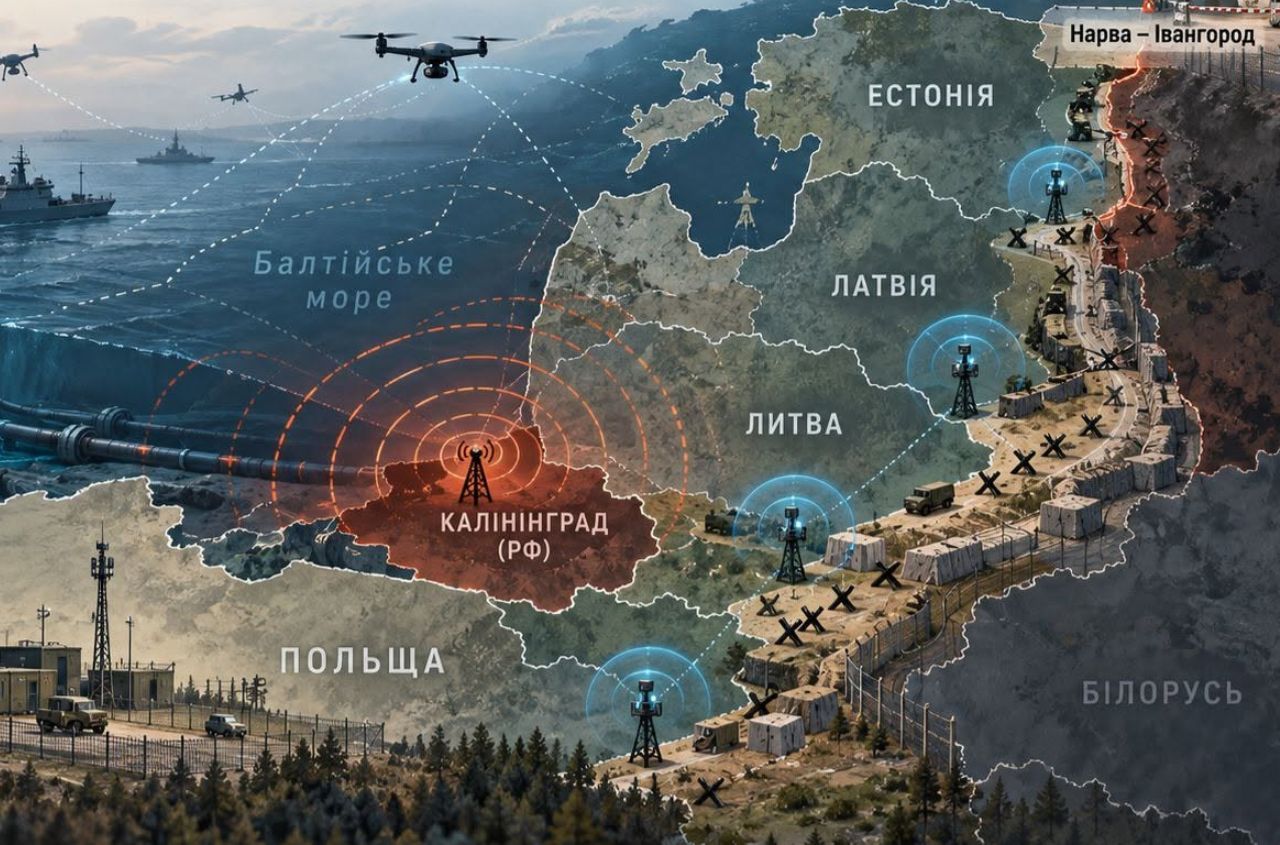
In fact, Putin has quite a few escalation scenarios, but none of them are encouraging. They can be divided into two groups: classical and what is now fashionably called hybrid. The classical ones include the long-discussed triad: an invasion of the Baltic states in the style of the “Crimean Spring,” strikes on Ukraine using tactical nuclear weapons, and a large-scale mobilization designed to sharply increase the supply of “cannon fodder” to the front. The pros and cons of these measures have been discussed many times by everyone, including myself, so I will not repeat them, and will instead focus on what is less often considered:
- Bringing Lukashenko into the war, not so much in terms of using the Belarusian army—which would still be difficult—but in terms of reusing Belarusian territory for a direct attack on Kyiv, as happened in 2022. However, beyond Lukashenko’s consent, this would also require a free expeditionary corps of 100–150 thousand troops, which is precisely where the problem lies.
- Turning again to North Korea for help and asking for more soldiers. But the effectiveness of North Korean “volunteers” remains questionable, and experts also agree that the Kim family could sell no more than several tens of thousands of “slaves,” which would not solve the problem at all.
- A combination of the first and second options: taking soldiers from Kim and sending them to fight via Belarus. In principle, it would be a neat idea, but logistically very difficult to implement.
- “Playing Trump” and attempting to kill, or even better, abduct Zelensky (imagine if he came to Moscow!). But the issue here is not only the unpredictability of the global reaction or the fact that Putin would immediately make himself a legitimate target, as with nuclear weapons use. The main problem is to ensure it turns out like Venezuela and not like Iran. After all, the “post-Zelensky” or “post-Putin” era could be not only better but also worse.
- Conducting targeted strikes (or alternatively sabotage operations) on military facilities in Europe linked to the production of critical components for Ukraine’s defense industry. This would amount to declaring a “limited war” on Europe, but with a certain degree of fanaticism—why not? The idea could be expanded to symmetrical strikes on European energy infrastructure or even hunting European merchant vessels under the principle of “an eye for an eye.”
- The beginning of a large-scale cyberwar against Europe, with the aim of provoking a major crisis without formally starting military actions. However, it should be taken into account that there could be a symmetrical response from the other side, and not a mild one.
In general, of course, Putin does have escalation scenarios in reserve—and not only suicidal ones. There are even more than necessary, but all of them are imperfect and lead to non-obvious and difficult-to-predict consequences that could make Putin’s position either better or worse. I think this alone explains why escalation has not happened so far.
Personally, in a critical situation I would not rely on the worn-out “three cards” (nuclear weapons, mobilization, or invasion), but rather, for example, on targeted strikes against facilities in Europe linked to Ukraine’s defense industry (alternatively—the seizure of French or British military vessels in response to the seizure of tankers from Russia’s shadow fleet).
By the way, I personally believe that the fact that the seizure of ships transporting Russian oil went unanswered played a role as a trigger in Europe’s shift in position regarding the “acceptable limits” of support for Ukraine. It became clear that Putin does not even respond to such painful blows to his reputation. It is hard to imagine something like this during the Cold War. The Cuban Missile Crisis comes to mind, but it almost led to a nuclear catastrophe and was resolved through a very difficult compromise. When Americans began intercepting tankers coming from Venezuela, Europe received a signal: apparently, this is allowed. The boundaries of what is possible have since expanded sharply. We are feeling the results now.
If Putin continues not to respond, the boundaries of what is possible may expand to the point where it will be too late to respond at all. But a full-scale response is unlikely, at least immediately. This is more in line with Putin’s style of partial measures: economical, limited, framed as a “signal,” with symmetrical responses that are not too dangerous (since Ukrainians now carry them out daily anyway), and with the expectation that Europeans will not go further than actively waving their hands in response. Moreover, if he were ready for more, it is unclear why he would wait so long—we would have already seen that “more” in action. So I would expect something palliative, such as a warning shot from a Russian frigate in front of a yacht carrying British pensioners.